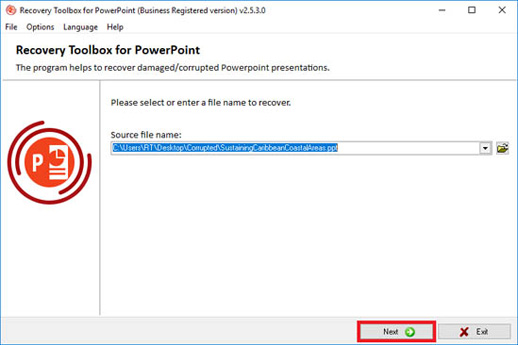
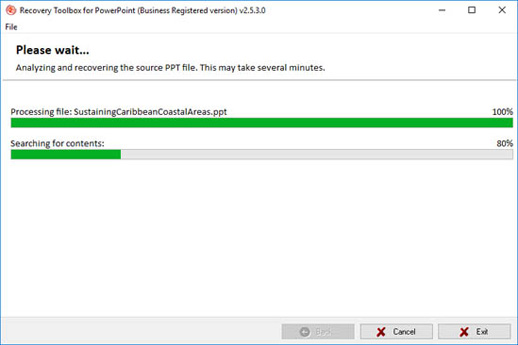
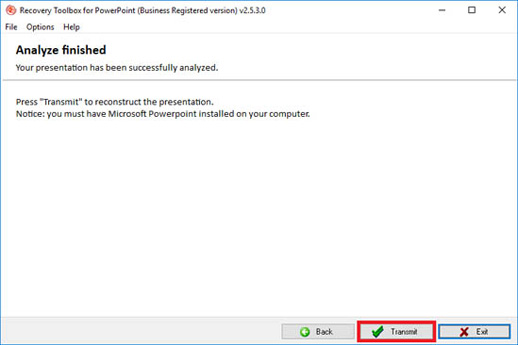
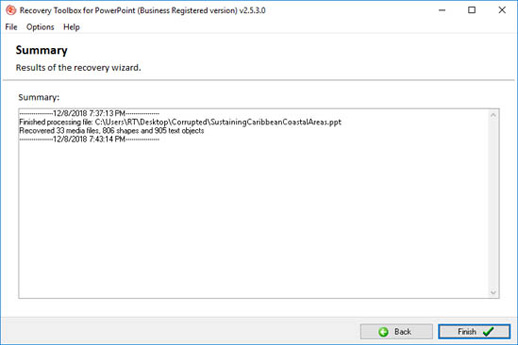
Practical testing of damaged PowerPoint presentation recovery: comparison of software and online services
Recovery Toolbox systematically conducts independent testing of software and online tools designed to recover PowerPoint presentations created in Microsoft Office. The purpose of these tests is to determine how effectively each solution copes with recovering data from real damaged files, as well as to identify ways to improve the quality and speed of the process in our own services and programs.

The testing is based on real user materials uploaded by customers via the cloud-based PowerPoint presentation recovery platform: https://powerpoint.recoverytoolbox.com/online/. Such tests are conducted on average once or twice a year, which allows us to track trends and identify the strengths and weaknesses of various recovery methods.
For analysis, at least 300 presentations are selected in each test cycle, differing in format (.pptx, .ppt), Microsoft PowerPoint version, size, and type of damage. Files can have a variety of defects, from broken slide structures and distorted images to lost text data and damaged macros.
Real users send materials that have been damaged as a result of a variety of factors — incorrect program shutdown, saving failures, damage to data carriers, or virus attacks. This selection makes the testing as close as possible to real-life conditions and allows us to objectively assess which solutions are truly capable of restoring the presentation to working order.
Preparation and selection of test files for testing PowerPoint presentation recovery
For testing, we used the most diverse set of damaged PowerPoint presentations possible. The files were not filtered or pre-sorted in any way — absolutely everything that had been downloaded in the weeks leading up to the test was included. This approach allowed us to make the experimental conditions as close as possible to real-life scenarios, where the user needs to recover data without any prior preparation.
The test set included presentations with different types of damage:
- files that cannot be opened at all;
- documents with partially damaged slide structure;
- presentations with lost graphic elements or formatting;
- files with damaged embedded media objects;
- documents that require a password to be entered.

The set also included presentations created in different versions of PowerPoint (from old *.ppt formats to modern *.pptx), with different sizes and structures. We deliberately did not exclude password-protected files in order to assess how the utilities cope with such cases.
Software and services involved in the test
During testing, we checked the performance of both desktop programs and cloud-based online services for recovering presentations.
These included:
Each utility and service were tested using the same set of test files. This ensured a fair comparison and allowed us to objectively evaluate:
- How accurately the original structure of the presentation is restored;
- The preservation of text, graphics, tables, and charts;
- The correctness of formatting and design template restoration;
- the program's ability to work with passwords and partially damaged data;
- the time required to process the document.
Thanks to this approach, we obtained a clear comparison that shows which solutions are best at recovering PowerPoint files under different conditions.
Results of practical testing of tools for recovering PowerPoint files
During the study, the results of various programs and online services designed to recover PowerPoint presentations were collected and analyzed. All the indicators obtained were systematized and entered into a comparative table, which made it possible to objectively evaluate the effectiveness of each solution.
The table reflects how successfully a particular utility or web service coped with the recovery task, taking into account both the degree of damage to the original file and its complexity (the presence of animations, embedded multimedia, graphic elements, and complex layouts).
This approach helps not only to determine the best tool overall, but also to choose the optimal option for a specific scenario — whether it is recovering simple slides or complex projects with a large amount of multimedia data.
Below is a summary comparison table obtained as a result of testing.



 100% Secure


 Windows®